

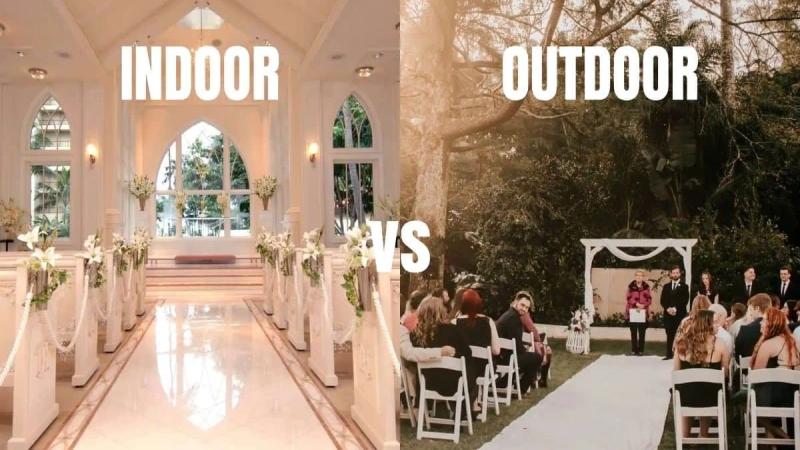

The outdoor versus indoor venue question comes up in nearly every event planning process, and the answer is almost never obvious. Outdoor venues offer atmosphere, natural beauty, and a sense of occasion that most indoor spaces can't replicate. Indoor venues offer control, reliability, and infrastructure that outdoor spaces can't match.
The right choice isn't about preference — it's about fit. Here's how to evaluate both options against the specific requirements of your event.
What outdoor venues do better
Atmosphere and photography
No interior designer can replicate the quality of natural light, open sky, and living greenery. Outdoor events photograph beautifully almost by default. For events where photography and social content matter — brand activations, product launches, milestone celebrations — outdoor venues have a natural advantage.
Scale and flow
Outdoor spaces handle large guest counts with a freedom that indoor venues struggle to match. Guests move naturally, conversation flows between different areas, and the energy of a large crowd feels expansive rather than loud. For cocktail receptions, networking events, and multi-activity experiences, outdoor spaces often create better social dynamics.
Uniqueness and memorability
A rooftop terrace, a private garden, a vineyard, a beachside space — these settings create a sense of occasion before the event has even started. Guests arrive already in a heightened state of experience. That emotional entry point is worth something.
What indoor venues do better
Weather reliability
This is the defining outdoor venue risk and it cannot be overstated. Even in favorable climates, weather is unpredictable. A tent addresses rain but not extreme heat or cold. Air conditioning and heating in a well-equipped indoor venue means your guests are comfortable regardless of what's happening outside. For events where guest comfort is non-negotiable — elderly guests, formal dress codes, multi-hour programs — indoor is lower risk.
AV and technical infrastructure
Outdoor audio is a solved problem with the right production company — but it's expensive to solve well. Ambient noise, wind, echo off surfaces, and the absence of wall-mounted speaker infrastructure all make outdoor AV meaningfully more complex and costly than indoor. For events with presentations, panel discussions, live performances, or hybrid elements, indoor venues offer better baseline infrastructure.
Lighting control
Daytime outdoor events are at the mercy of where the sun is. Evening outdoor events require lighting infrastructure that adds cost and logistics. Indoor venues give you complete lighting control — a significant advantage for events where lighting design is part of the experience.
Noise ordinances
Most outdoor venues are subject to earlier noise cutoffs than comparable indoor spaces, particularly in residential areas. If your event requires music past 10pm, verify the noise ordinance situation carefully for any outdoor venue.
The decision framework
Work through these five questions in order:
1. What is the weather risk profile for your date and location?
Research historical weather for your event date and city. If there's a greater than 20% chance of rain or temperature extremes, either plan a solid indoor backup or choose an indoor venue. "We'll hope for the best" is not a contingency plan.
2. Does your program require AV above basic background music?
If yes — presentations, live performance, hybrid streaming, multi-zone audio — factor in the real cost of outdoor AV production. For events above 100 people, quality outdoor AV adds $3,000–$8,000 to your production budget. That changes the comparative value calculation.
3. What is your noise cutoff requirement?
If your event needs to run past 9pm with amplified music, verify outdoor venue noise ordinances explicitly before shortlisting. Don't assume.
4. How important is photography and social content to your event outcome?
If it's high priority, outdoor venues have a structural advantage — particularly for daytime events. If photography is secondary, this factor deprioritizes.
5. What is your guest profile?
Older guests, guests with mobility considerations, guests in formal attire, and large groups with varying comfort preferences all favor indoor environments. Younger, casual, activity-oriented groups often prefer and expect outdoor settings.
The hybrid solution: semi-covered outdoor spaces
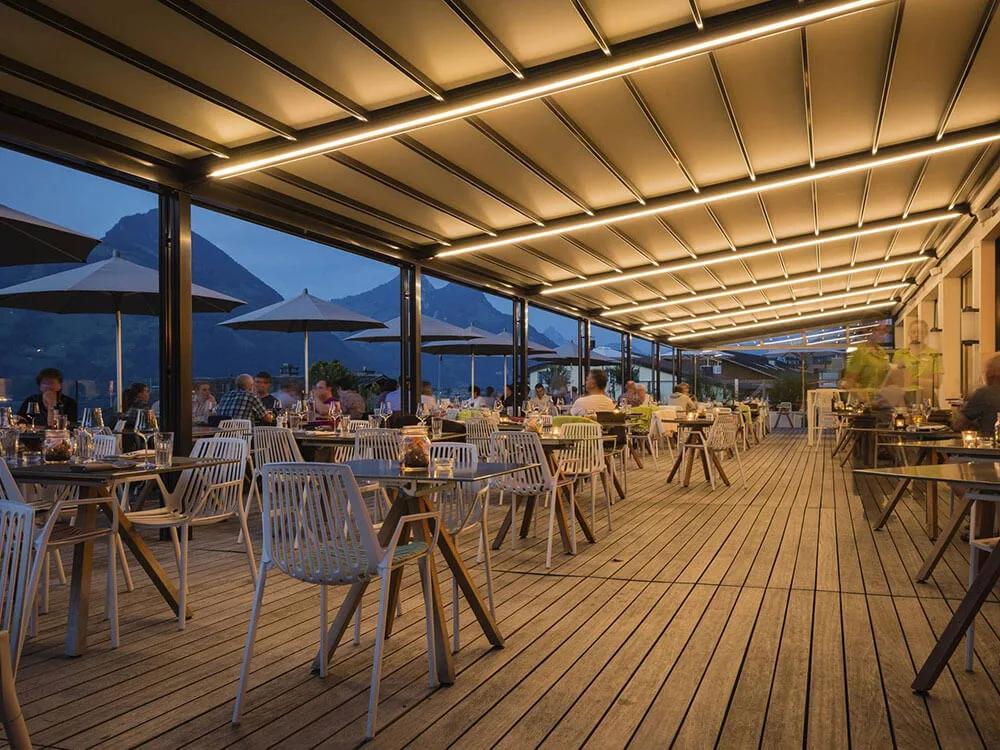
The strongest answer to the indoor/outdoor question for many events is a venue that offers both — a covered outdoor terrace, a retractable-roof structure, or an indoor space that opens fully to an outdoor area. These spaces offer outdoor atmosphere with indoor-adjacent protection and AV infrastructure. They command premium pricing for good reason.
When shortlisting venues, specifically search for spaces described as: covered terrace, retractable roof, indoor-outdoor flow, or courtyard with weather protection. On KneesUp Venues, use the category and amenity filters to surface these spaces quickly.
Both types of venues have a place
Neither outdoor nor indoor is categorically better. The best venues are the ones that fit the specific requirements of a specific event. A morning product launch for a wellness brand belongs outside. A formal gala dinner belongs inside. A summer networking reception belongs on a rooftop. A November leadership offsite belongs in a warm, well-equipped interior.
Get the fit right and the venue does half your event planning work for you.